Search Engine Marketing (SEO)

Understanding search intent in Flowboost’s restaurant

Keywords tell you what people type. Search intent tells you what they actually mean. Here is why the difference changes everything.
You have been in that conversation. Someone asks "what do you want for dinner?" and you say "anything." But you do not mean anything. You mean: not sushi again, not too expensive, ideally something healthy… Google has the exact same problem every time someone types a search, and that is search intent. Understanding it changes everything.
When people enter a query, they rarely describe exactly what they want. They type a few words and expect Google to interpret the rest. That hidden meaning behind the words is what we call search intent.
A person typing “buy apple” might want to buy a phone, a laptop, or a fruit... The keyword is identical, but the need behind it is completely different. Google’s entire job is figuring out what someone actually wants, not just what they typed.
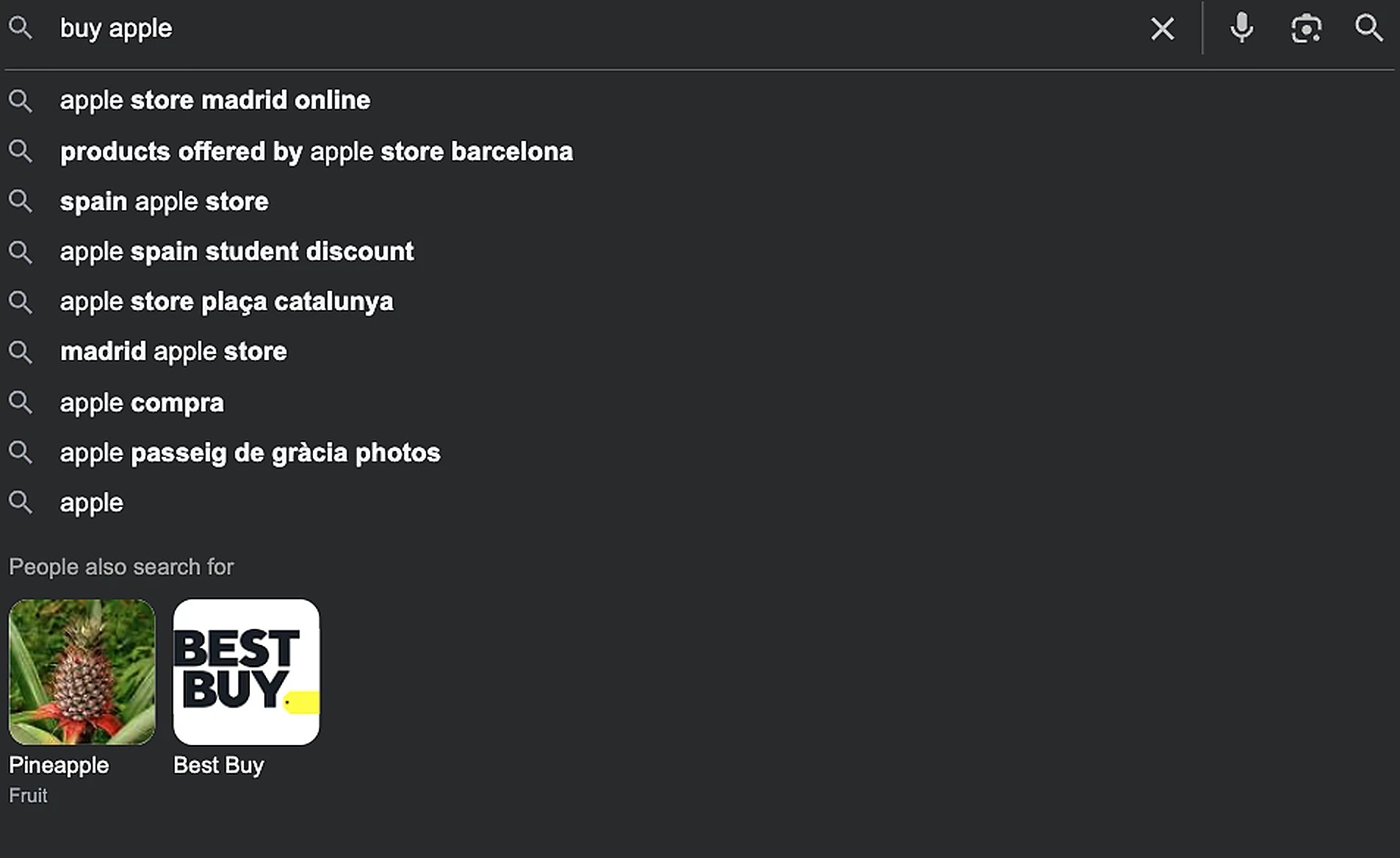
That gap between the words and the meaning is search intent. Understanding search intent is like reading the room in a restaurant. The better you understand what someone really wants, the easier it becomes to serve the right thing. And understanding it is often the difference between a page that ranks and one that sits quietly on page four, waiting for visitors who never arrive.
What is search intent?
Search intent is the purpose behind a search query. It describes the real-world goal someone is trying to accomplish when they type something into Google. While keywords reveal the language people use, intent reveals the situation they are in.
Think of Google like a waiter in a restaurant.
When someone says, “I’ll have something light,” the waiter has to interpret what that actually means. Are they looking for a quick snack? Something healthy? Something small before a bigger meal? The request itself is vague, but context helps determine what the person really wants.
Search engines perform the same interpretation every time someone types a query.
Consider these three searches:
running shoes
best running shoes for flat feet
buy Nike Air Zoom Pegasus
Each query involves running shoes, but the person behind each search is in a completely different situation. One person is browsing the menu. Another is comparing options. The third has already decided what they want and is ready to order.
If you serve the wrong experience to any of them, they leave. Someone researching does not want a checkout page, and someone ready to purchase does not want a 2,000-word educational article.
Google understood this long before most marketers did. Modern algorithms do not just match keywords anymore. They try to understand what kind of answer someone actually needs at a specific moment. That shift is why search intent has become one of the most important concepts in modern SEO. In a restaurant, a good waiter learns to read the guest. In SEO, Google has to do the same with every search.
The 4 types of search intent
Search intent generally falls into four categories. The framework is also reflected in Google’s Search Quality Evaluator Guidelines, the document human quality raters use to evaluate search results.
Think of these as the different kinds of guests entering the restaurant. Each person arrives with a different mindset, and the experience they expect is completely different.
Informational Search Intent
Informational search intent is the person standing outside the restaurant reading the menu in the window. They are curious and trying to understand their options before committing to anything.
Searches such as “what is Reddit GEO,” “how to disavow toxic links,” or “what is Google Ads AI Max” fall into this category. People performing these searches want explanations, guidance, and clarity about a topic they are exploring.
Content that performs well for informational intent focuses on education. Articles should answer the question clearly, use examples where useful, and help readers understand a topic step by step. The goal is not selling something immediately but building understanding and trust. At this stage, the guest is not ready to order yet. They are just reading the menu.
Commercial Search Intent
Commercial search intent appears when someone has already entered the restaurant and started asking the waiter for recommendations. They know they want something, but they are still comparing the available options.
Searches like “AI agents for Google Ads,” “Product image tools,” or “Google Ads scripts” reflect this stage. The searcher is evaluating alternatives and looking for insight into which option might suit them best.
Content that works well for commercial intent helps people make choices. Reviews, product or services information, and case studies provide the context someone needs when deciding between different solutions. They are not ordering yet, but they are deciding what looks best.
Transactional Search Intent
Transactional search intent is the moment someone closes the menu and places their order. The decision has already been made. Searches like “Google Ads services,” “SEO audit,” or “brand marketing agency” signal that the user is ready to take action.
Content targeting transactional intent should remove friction rather than add complexity. Product pages, service pages, and clear calls to action perform best because the user’s primary goal is completing a task.
A person ready to order does not want another explanation of the menu. They want their dish served quickly. This is the easiest moment to serve the right dish, if you understood the order correctly.
Navigational Search Intent
Navigational search intent occurs when someone already knows exactly which restaurant they want to visit but needs directions to get there.
Searches such as “Facebook login,” “Nike website,” or “Flowboost marketing agency” belong to this category. The user already has a destination in mind and simply wants to reach the correct page.
In these cases, SEO is less about persuasion and more about accessibility. Clear page titles, recognizable branding, and logical website structure help people reach the right place immediately. The guest already knows where they want to sit. They just need to find the door.
Why search intent matters more than keywords
Many businesses assume ranking for the right keywords automatically guarantees success. In reality, the relationship between keywords and performance is more complex.
Imagine someone walks into a restaurant asking for a small sandwich. Instead of a sandwich, the waiter serves them a twelve-course tasting menu. The food might be excellent, but it is completely wrong for the situation. The problem isn’t the quality. The problem is the timing.
That is exactly what happens when content and search intent do not align.
A person searching “SEO for beginners” expects a simple explanation, not a deep technical breakdown. Someone searching “buy SEO software” expects a product page, not a long educational article. When the experience does not match the intent behind the search, visitors leave quickly.
"Traffic that leaves immediately is worse than no traffic at all. It sends Google a signal that your content did not deliver."
Google observes those reactions.
Search engines collect enormous amounts of behavioral data, including how long visitors stay on a page and whether they immediately return to the search results. Over time, those signals influence rankings far more than keyword placement alone.
When content matches intent, people stay longer and engage with the page. When engagement increases, Google interprets that behavior as a signal of relevance.
How to identify search intent
Understanding search intent does not always require complicated tools. Often the best way to identify it is simply to look at what Google already shows.
If you want to understand what someone wants in a restaurant, you don’t guess. You look at what they ordered before, what other guests are eating, and what the waiter recommends. Google works the same way.
Try this now
Open an incognito tab. Search for the keyword you want to target. Look carefully at the first page of results.
What type of content dominates: blog posts, product pages, comparison articles, or landing pages? How long and detailed are the top results? What questions appear in the headings? Are there featured snippets, and if so, in what format?
Google has already done the research for you. The results it surfaces reflect the intent it has identified for that query.
The format of the results reflects what searchers expect to see.
Another useful signal is the “People Also Ask” box. The questions displayed there reveal related concerns and additional layers of intent surrounding the original query. In many cases, these questions provide both insight into user intent and inspiration for new content ideas.
Matching content to search intent
Once you understand what the guest wants, the next step is simple: serve the right dish. When you understand the intent behind a search query, the next step is aligning your content with that intent.
For informational search intent, educational content works best. Articles should explain the topic clearly, provide context, and answer the main question without unnecessary complexity.
For commercial search intent, comparison content is more effective. Visitors evaluating options want transparency, trade-offs, and realistic insights about the solutions available.
For transactional search intent, simplicity is key. Product or service pages should remove hesitation and guide visitors toward action as smoothly as possible.
For navigational search intent, the focus should be on clarity. Visitors who search for a brand name expect to reach the correct page instantly.
The most common mistake businesses make is treating every search the same. They publish one type of content and hope it performs across all queries. But each search represents a different moment in the user journey. Serving the wrong experience is like giving every guest in a restaurant the same dish regardless of what they ordered.
When content and intent do not align
When content fails to match search intent, the symptoms often appear gradually.
Pages gain impressions but receive few clicks. Visitors arrive but leave quickly. Traffic increases while conversions remain low. These issues often look like problems with headlines, design, or keywords.
In many cases, however, the real issue is simpler. The page is answering a question nobody at that stage of the journey was asking.
Sometimes the solution is adjusting the format of the content. In other situations, it means splitting one page into two separate pieces designed for different types of intent. Even small changes to an introduction or page structure can significantly improve alignment between the searcher’s expectation and the page they land on.
SEO is not just about publishing content. It is about understanding what someone actually needs at the moment they search.
Understanding intent means understanding people
Search intent is not just an SEO concept. It is a customer understanding concept.
Every search query represents a real situation. Someone might be learning about a topic, comparing solutions, or preparing to take action. The words they type into Google are simply the surface layer of that situation.
Businesses that perform well in search are rarely the ones that publish the most content or chase the most keywords. They are the ones that understand what people need at different moments and create content that matches those moments.
When someone is researching, they need clarity.
When someone is comparing, they need guidance.
When someone is ready to act, they need simplicity.
SEO works best when content aligns with those stages.That is why search intent matters so much. It shifts the focus away from optimising for words and toward solving real problems at the right time.
In the end, ranking in Google is not about who used the right keyword the most times. It is about who understood the searcher best.


Frequently asked questions
Explore other blogs






Rotterdam
Bierstraat 123 C
Valencia Carrer del Prof. Beltrán Báguena 5


Flowboost 2026 ~ All rights reserved.