The Big Bang – When search was born from chaos
(1969 - 2002)
Every evolutionary story begins with an explosion. For the universe, it was the Big Bang. For the digital world, it was the birth of the internet — then known as ARPANET — and soon after, its first truly public layer: the World Wide Web.
In the late 1990s , just before Google discovered its own gravity and people started asking “what is SEO?”, the web expanded at a pace no one could control. Websites multiplied, information exploded, and pages were created faster than they could be categorized. Search engines like AltaVista and Yahoo were trying to make sense of an ever-growing universe of content, but their systems were still primitive. There were no refined algorithms, no deep learning models, and no sophisticated interpretation of intent. Just raw data and simple ranking signals.
In that environment, SEO emerged, not as manipulation, but as translation. Search engines needed signals to understand what a page was about, and the only signals they could reliably process were mechanical ones: keywords in titles, meta tags, repetition in content. So marketers optimized for those signals. When keyword density influenced visibility, pages were written for density. When meta tags carried weight, they were packed with terms.
Yes, this sometimes meant stuffing a keyword into a page 50 times or hiding text in the background. But that behavior did not appear out of nowhere. It reflected the system that existed at the time. When search engines were simple, optimization was simple. When algorithms relied on literal matches, ranking became a numbers game.
The real lesson from this first phase in the evolution of SEO is not that early tactics were naïve. It is that SEO has always been shaped by how search engines process information. Optimization has never existed in isolation; it has always been a response to the environment.
When the system was simple, tactics were simple. As the system evolved, strategy had to evolve with it. And that pattern, environment changes, optimization adapts would define everything that followed.
The age of dinosaurs – When bigger meant better
(2002 - 2010)
After the Big Bang came dominance. In prehistoric times, the dinosaurs ruled because they were large, visible, and powerful. Size meant survival. The bigger you were, the harder you were to ignore.
Early SEO entered a similar phase. As search engines matured slightly, one thing became clear: more signals meant more visibility. More keywords, more backlinks, more indexed pages. If one link helped, a hundred seemed better. If mentioning a keyword twice worked positively, repeating it twenty times felt like insurance.
And for a while, it worked remarkably well.
Entire industries were built around link farms and exact-match domains. Pages were engineered for algorithms rather than for humans, and authority was simulated through volume instead of earned through value. Websites grew massive footers packed with keywords, each one added in the hope of gaining a slight edge in the rankings.
The comparison with dinosaurs is not just playful. Both thrived because the environment allowed them to. Algorithms at the time relied heavily on measurable, surface-level signals. They counted links. They counted keywords. They rewarded what they could easily quantify.
The strategic lesson is clear. SEO has never been about isolated tactics; it has always been about responding to what the environment rewards. In this era, the environment rewarded scale, so the industry scaled aggressively.
But scale without intelligence creates fragility. When success depends on exploiting a measurable loophole, the moment that measurement changes, everything built on top of it becomes unstable. Like a meteor striking an overgrown ecosystem, algorithm updates wiped out entire species of tactics overnight, and what followed was a long, unforgiving winter.
The evolution of SEO was moving toward its first true mass extinction event.
The First Ice Age – When Google changed the climate
(2011 - 2013)
Every evolutionary timeline includes a moment when the environment shifts so dramatically that survival becomes uncertain. In nature, ice ages reshaped entire ecosystems. Species that once dominated suddenly struggled to adapt, not because they had become weaker, but because the rules of survival had changed.
For SEO, that shift arrived with Google Panda in 2011 and Google Penguin in 2012. Both were being major, now-integrated, algorithm updates to improve search quality.
Panda targeted thin, low-quality content that existed purely to rank. Penguin focused on manipulative link schemes and artificial backlink profiles. Overnight, strategies that had fueled growth for years began to collapse. Rankings dropped. Traffic disappeared. For many, it felt like an algorithmic ice age had swept through the SERPs, leaving frozen rankings and digital fossils behind. This was not random punishment. It was a climate change.
Google recalibrated what it valued. Instead of rewarding volume and artificial authority, it began prioritizing quality, relevance, and trust. Content farms that had once thrived were suddenly unsustainable. Link networks that looked impressive on paper, became liabilities.
The strategic lesson here runs deeper than “avoid spam.” Environmental shifts in SEO are inevitable. Algorithms evolve to correct imbalances. When a tactic becomes too easy to exploit, it eventually loses its effectiveness. What feels like a winning formula today can become a liability tomorrow.*when not paying attention i can feel like tomorrow but you get a little heads up before.
The evolution of SEO and Google has always followed this pattern. When manipulation outweighs value, the system corrects itself. And when the system corrects itself, only those built on genuine substance remain stable.
This stage marked a turning point. SEO could no longer rely on mechanical optimization alone. Survival now required something more durable: quality, credibility, and long-term thinking.
And as in natural evolution, the species that adapted did not just survive the ice age. They evolved beyond it.
The Rise of Intelligence – When SEO learned to understand
(2013 - 2019)
After the ice age, the world did not return to what it once was. The dominant species were gone, and in their place, new forms of life began to emerge. Mammals did not win because they were larger or louder. They survived because they adapted, evolved, and developed intelligence.
SEO entered a similar phase.
With updates like Hummingbird, RankBrain, and later BERT, Google shifted from simply matching keywords to interpreting meaning. Search queries were no longer treated as isolated strings of text. They were understood in context. The focus moved from what users typed to what they meant / their meaning behind the words.
This was a fundamental shift in the evolution of SEO.
Previously, optimization was about matching phrases. If someone searched for “best running shoes,” pages that repeated that exact phrase frequently had an advantage. But as Google’s algorithms became more sophisticated, they began to understand relationships between words, topics, and intent. Synonyms mattered, context mattered and user behavior mattered.
The joke, if there is one, is that SEO suddenly required actual intelligence. Tactics that once revolved around repetition and formula were replaced with strategy, structure, and depth. You could no longer trick the algorithm by inserting the right keyword in the right places. You had to genuinely answer the question behind the search.
When search engines evolve toward understanding, SEO must evolve toward relevance. Optimization is no longer about checking off a checklist of technical signals alone. It is about aligning content with intent, building topical authority, and designing experiences that solve real problems.
This stage in the evolution of content marketing and SEO marked the beginning of modern strategy. Pages stopped competing as isolated entities and started functioning as part of broader content ecosystems, called clusters. Internal linking, semantic relevance, and user experience became structural advantages rather than optional enhancements.
The Age of Humans – When SEO became strategic
(2018 - 2021)
In evolutionary history, humans did not survive because they were the fastest or the strongest. They survived because they built systems. Language, tools, culture, collaboration, all layered on top of one another to create something greater than individual strength.
Modern SEO entered its human phase in much the same way.
After algorithms learned to understand intent, the competitive advantage shifted again. Ranking was no longer about a single optimized page. It became about ecosystems. Brands stopped hunting isolated keywords and started building content civilizations, structured, interconnected, and designed to last. About how pages connect, how topics interlink, and how authority is built over time. The conversation moved from “How do we rank this keyword?” to “How do we own this topic?”
This is where the evolution of SEO and Google matured.
Concepts like E-E-A-T, topical authority, and structured internal linking stopped being advanced tactics and became foundational principles. Authority was no longer simulated through backlinks alone; it was demonstrated through depth, clarity, consistency, and interconnected networks of content. Just as humans thrived by building tribes and knowledge systems, modern SEO scales through connected ecosystems, not standalone pages.
SEO at this stage is architectural. This is what evolving SEO looks like in practice, less about isolated tactics, more about interconnected systems. It requires planning, structure, and long-term investment. Content must support other content. Internal linking must guide users and search engines logically. Strategy must replace tactics.
This phase marks the transition from reactive optimization to deliberate growth. And just as human evolution did not stop with language or tools, SEO was not done evolving either.
The AI Expansion – From earth-bound SEO to multi-planet Discovery
(2022 - present)
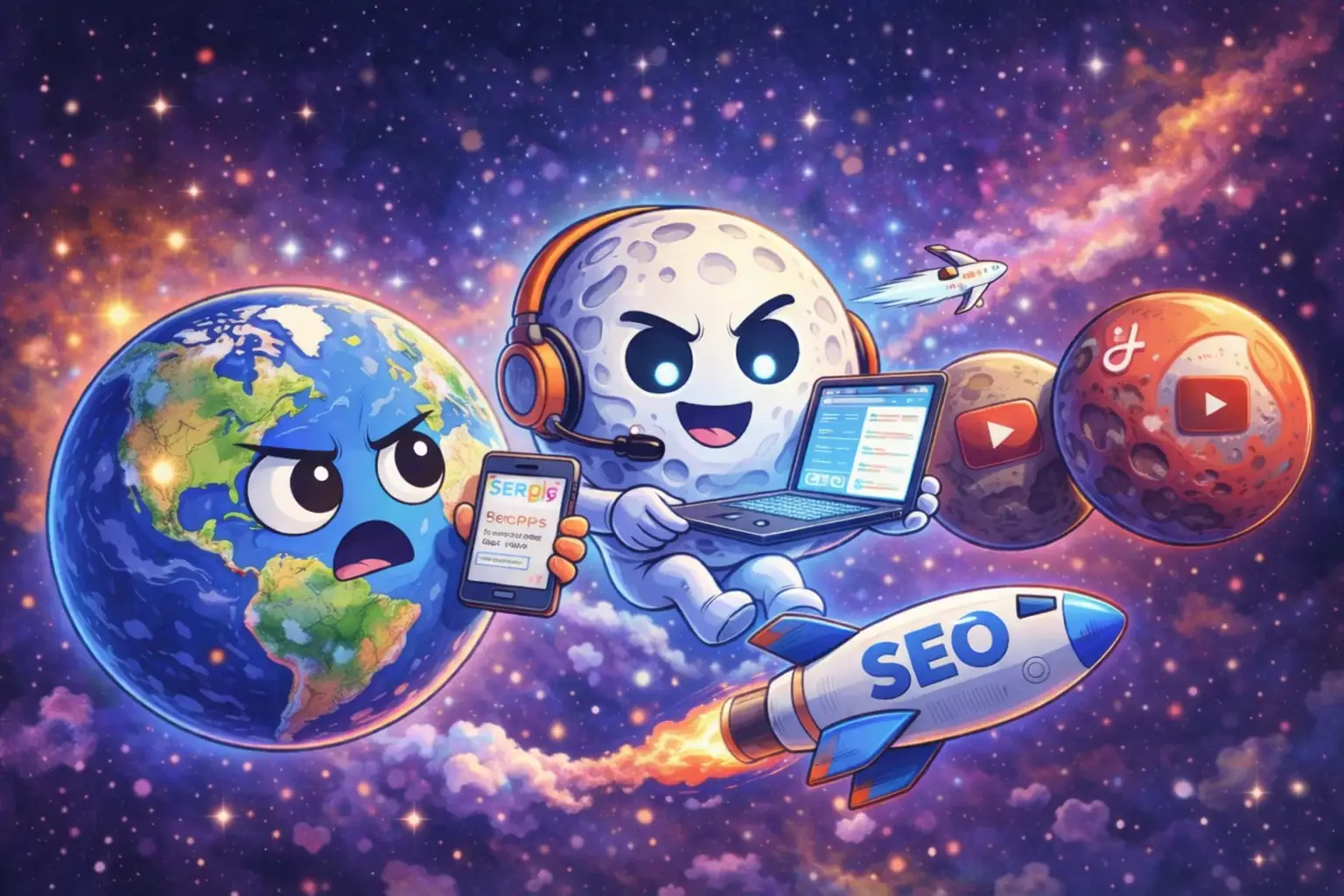
The AI revolution is not just another algorithm update, nor another climate shift. It is territorial expansion. For decades, SEO was Earth-bound. Google was the dominant planet. Even when social media grew, search intent still gravitated back to the SERPs. The launch of ChatGPT in late 2022 — followed by the emergence of other planets and moons in the search ecosystem — changed something fundamental. Search did not just improve. It diversified.
Users began asking questions inside AI systems and social media platforms instead of traditional search engines. They began discovering products on TikTok instead of starting on Google, or watching long-form answers on YouTube instead of clicking blog posts. Search stopped being a location, and became a behavior.
As search behavior diversified, the ecosystem expanded. What was once a single dominant planet became a multi-planet system, each environment operating under different survival conditions.
Google’s SERPs still reward crawlability, authority signals, and structured intent matching.
Large Language Models reward clarity, entity relationships, contextual depth, and credibility.
YouTube rewards retention, engagement, and behavioral signals.
TikTok rewards velocity, interaction, and cultural relevance. Each planet has its own gravity.
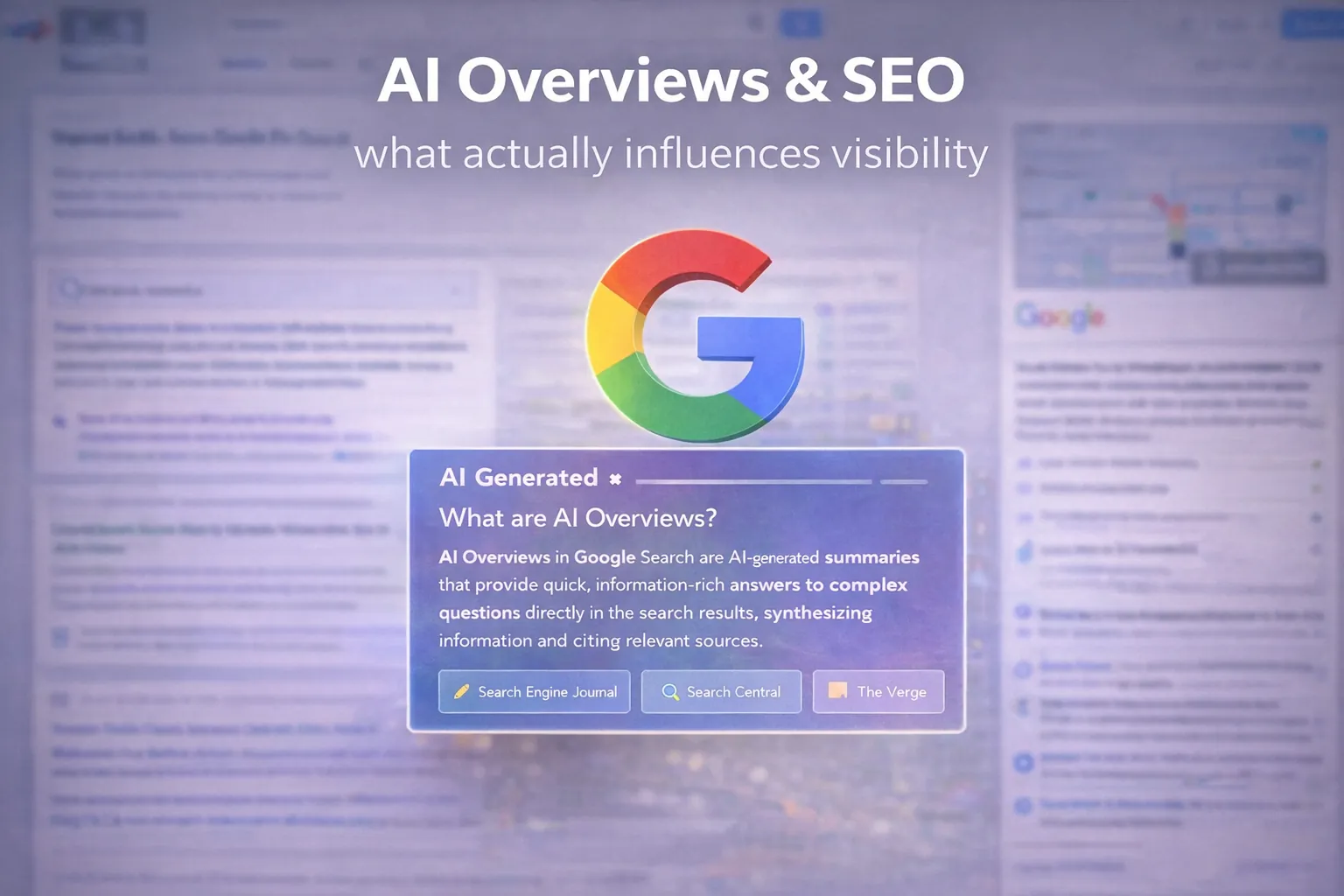
Within Google’s own orbit, AI Overviews function like a satellite layer. They do not replace rankings, but they reshape how visibility is distributed. Position still matters, yet interpretation now sits on top of it, influencing which sources are surfaced and synthesized.
These systems are not replacing SEO. They are extending it. What used to be a single-planet strategy has become a multi-surface strategy. Optimization is no longer confined to ranking signals alone. It must account for interpretation signals, recommendation systems, and cross-platform authority. When the ecosystem expands, strategy must expand with it.
In a multi-planet search universe, survival no longer depends on dominating one environment. It depends on being adaptable enough to thrive across all of them.
Evolution never ends - and neither does SEO
From the SERP caves to the AI moon, SEO has never been about tricks. It has been about adaptation. Each era rewarded what the environment could measure, and eliminated what it could exploit. When the rules changed, survival required evolution.
The caves rewarded repetition. The dinosaur era rewarded scale. The ice age rewarded quality. The rise of intelligence rewarded relevance. The human phase rewarded structure and systems. Now, the multi-planet era rewards adaptability across environments.
SEO does not die. It transforms.
As long as information needs to be discovered, interpreted, and trusted, optimization will exist. The platforms will shift. The interfaces will evolve. The gravity will change.
But survival will always belong to the most adaptable.