A systematic approach to building brand memory through behaviour-triggered paid media cycles. Grounded in science of how brands actually grow.
Limitations of Performance Marketing
Performance marketing can only capture demand that already exists. It targets people actively searching, clicking, or comparing. But who created that demand in the first place? Brand marketing did. Without it, you’re fishing in a shrinking pond.
Binet & Field — The Long and the Short of It (IPA, 2013)
Uneven Budget Split
Analysis of over 1,000 advertising effectiveness case studies found that the optimal budget split is roughly 60% brand building to 40% activation. Yet most digital-first brands spend less than 20% on brand. The result? Short-term gains that plateau and eventually decline.
Binet & Field — IPA Databank, 1,000+ case studies
The compounding effect of Branding
Binet & Field, IPA Databank analysis
Recommended (long-term growth)
Brand Building 60%
Activation 40%
Typical (most digital-first brands)
~17%
~83% Performance / Activation
Why Brand Building?
Brand-building campaigns produce effects that compound over time — each impression adds to existing memory structures, making future impressions more effective. Activation campaigns produce short spikes but no lasting growth. Over a 3-year horizon, brand-led strategies consistently outperform activation-led strategies on all business metrics including revenue, profit, market share, and pricing power.
Brand campaigns produce roughly 3x the long-term business effects of activation campaigns
IPA Effectiveness Databank
Trusted by 11,000+ businesses
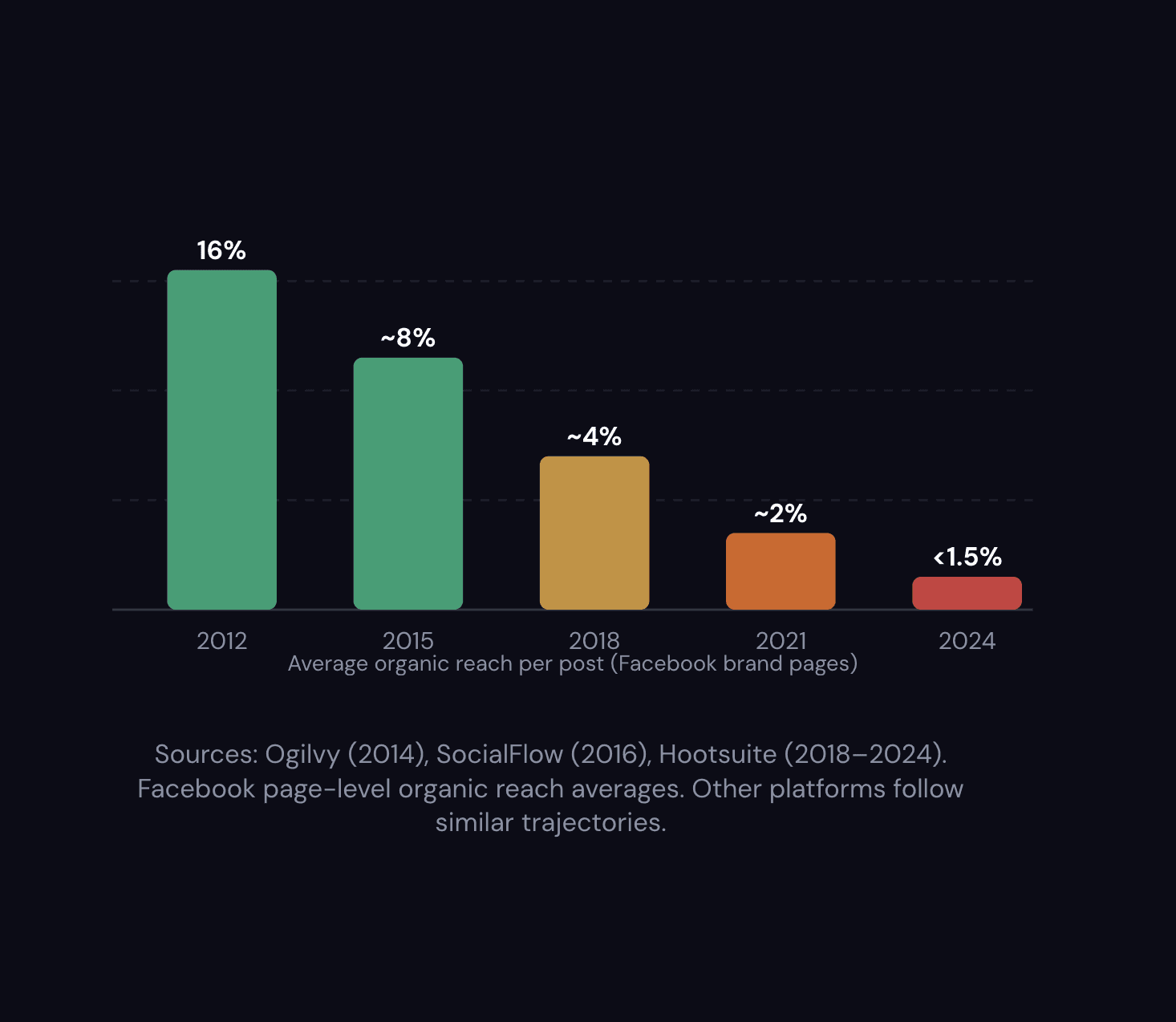
Between 2012 and 2024, average organic reach on major social platforms fell from 16% to under 1.5%. For a decade, brands got free brand-building through organic content — regular touchpoints that kept them visible, familiar, and top-of-mind. That era is over.
Most brands replaced organic reach with conversion campaigns. But conversion campaigns harvest existing demand — they don’t create it. Without a system for building brand memory, the demand pool slowly shrinks and performance degrades across every channel.
Digital Global Overview Reports 2012–2024
The 95/5 Rule
Hootsuite / We Are Social — Digital Global Overview Reports 2012–2024
Not buying today
Future customers who haven’t entered a buying window yet. They will buy eventually — the question is whether they’ll remember your brand when they do. Brand marketing makes sure they do.
In-market now
Pulse Brand Marketing Method
Builds memory in the 95%
Reaches future buyers before they enter market
Builds familiarity so your brand wins when they’re ready
Conversion campaigns get more effective over time
Creates a compounding advantage competitors can’t easily replicate
Performance Marketing Alone
Fights over the 5%
Competes for the same expensive buyers as everyone else
Ignores 95% of future customers entirely
Performance declines as the buying pool gets exhausted
CPAs rise as competition for the same buyers intensifies
The method
Qualify. Pulse. Loop. Convert.
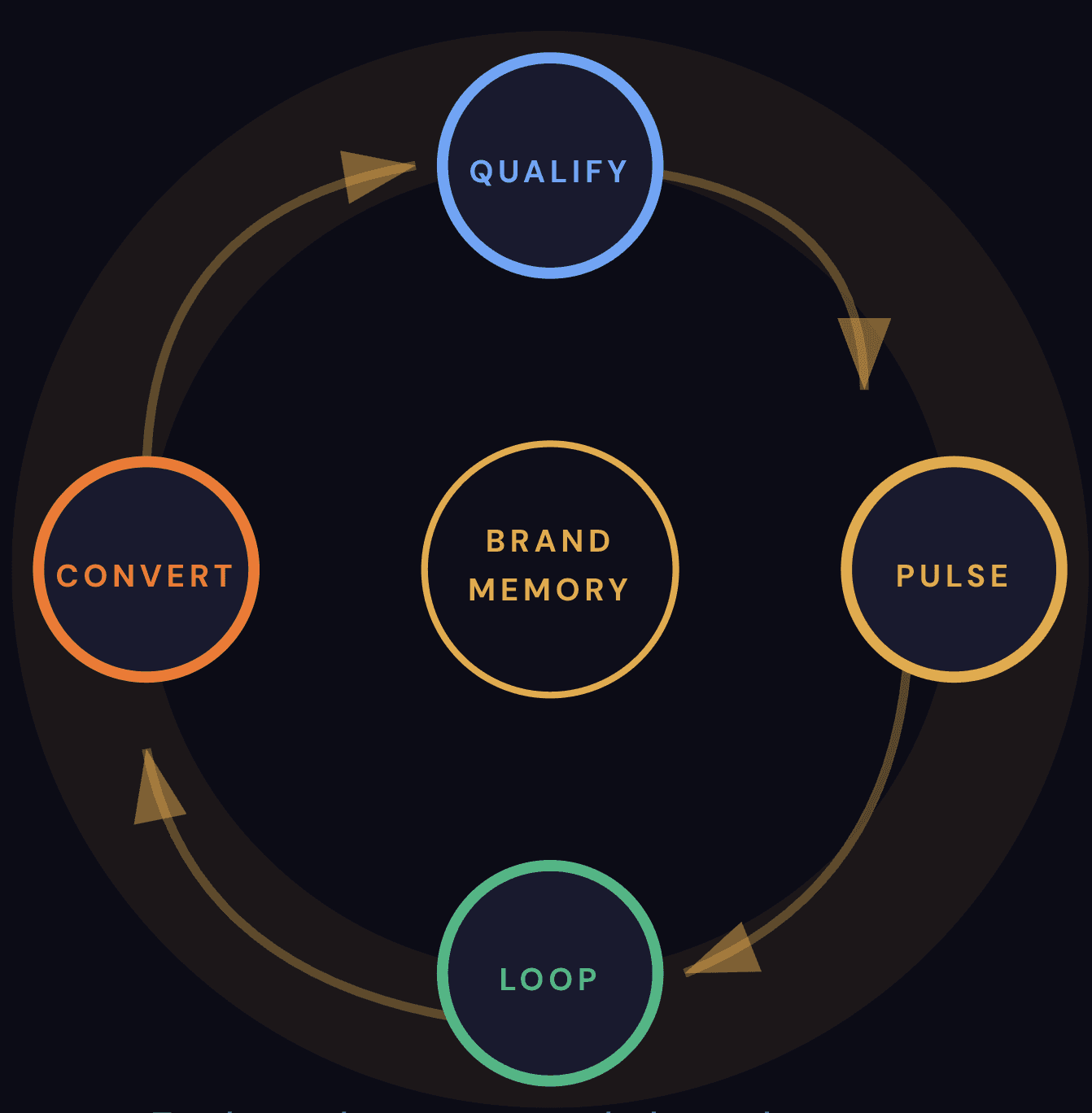
The funnel
How Pulse moves people
through stages
UNAWARE
Broad audience pool
Broad qualification campaign
AWARE
Passed attention filter
Qualified by proprietary signal
ENGAGED
In active pulse window
Concentrated memory burst
FAMILIAR
Completed multiple cycles
Re-entry accelerator
READY TO BUY
Enters buying window
Brand wins consideration set
The Science
Why memory beats persuasion
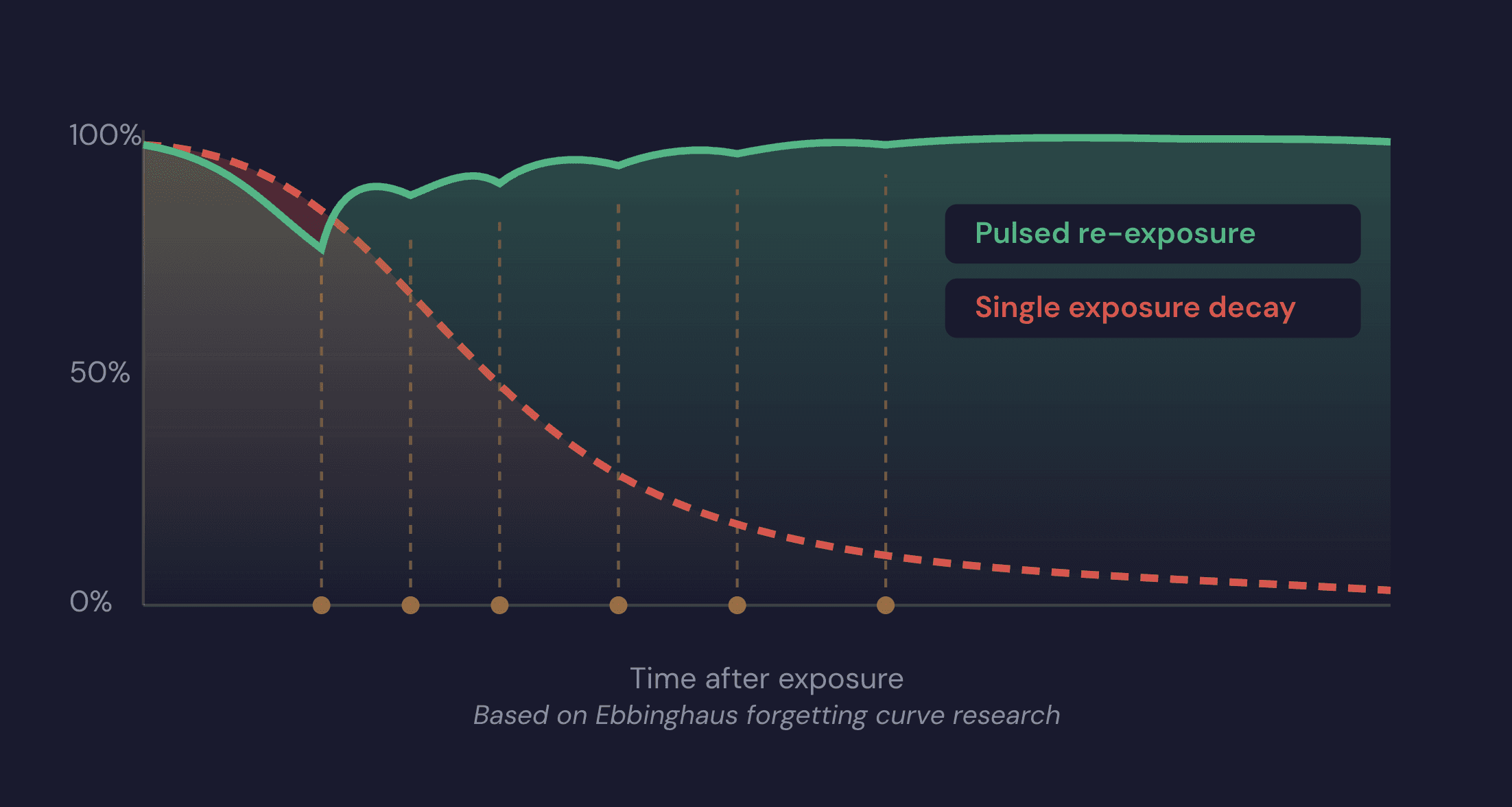
Clustered Exposure & The Forgetting Curve
Compounding Cycles
Distinctive Brand Assets
Emotional Priming Over Rational Persuasion
Single Exposure vs. Pulsed Re-exposure
How Pulse fights the forgetting curve through concentrated frequency bursts
The Science
Why memory beats persuasion
The Diagnostic is our commitment to honest fit assessment — we’ll tell you if Pulse isn’t right for your business.
Client Fit
Who Pulse works for,
and who it doesn’t
Ideal clients
Considered purchases (€50+ AOV)
Products with repeat purchase dynamics
Brands with high customer LTV
Long buying cycles
Multi-category retailers
Subscription or consumable businesses
Performance Marketing Alone
Low AOV one-time impulse purchases
Need positive ROAS in month one
No budget for brand + conversion simultaneously
Unwilling to commit to the process
Research Foundation
The evidence base behind the
Pulse method
The Long and the Short of It
Building Distinctive Brand Assets
The 95/5 Rule
Effectiveness in Context
Memory: A Contribution to Experimental Psychology